
Searching Washington County Civil Dockets
Begin any Washington County civil docket lookup at the North Carolina eCourts Portal. Smart Search there accepts a case number, a party name, or a business name. You can narrow results to Washington County. Case types offered to the public include Civil Actions, Estates, and nonconfidential Special Proceedings. Add a location, status, or filing-date filter to trim a long result list. Anyone can search anonymously. An account unlocks no restricted records.
Offline routes work too. The Clerk’s self-service terminals cover civil, estate, and special-proceeding information at the courthouse. For paper files, older records, or certified copies, visit the first-floor Clerk counter in Plymouth. The Washington County Clerk answers the phone at (252) 791-4000. Mail goes to Washington County Courthouse, PO Box 901, Plymouth, NC 27962. The NCAOC public-record request form covers administrative records only, not county case files.
- Open Portal Smart Search and search by case number, party, or business name.
- Add Washington County as the location and select the appropriate public civil-side case category.
- Review the public Case Summary for assignment information, events, hearings, dispositions, and financial information where applicable.
- Use Search Hearings or the civil calendar files when the immediate need is a current setting.
- Ask the Washington County Clerk for an official document, paper-file access, or copy process if Portal is incomplete or the document matters.
Washington County Civil Smart Search
Smart Search earns its keep because it starts from what you actually know. Official search routes include Party Name, Nickname, Sounds Like, and Business Name. From there, layer in a civil case type, a case status, and a filing-date range. The state’s advanced guide warns that mismatched case-type and status filters can bury a record. So a narrow search that comes back empty is a cue to loosen the filters. It is not a cue to give up.
The Portal training materials separate two very different tools. Smart Search returns the Case Summary, which is also called the Register of Actions. Search Hearings, by contrast, checks for a current date, time, courtroom, or judicial officer. NC Judgment Search indexes judgment details by party or number. That index is not the full Washington County civil docket. Still, a case number found there can open the fuller public record.
A public civil Case Summary may list a cause of action. That is the claim category shown for eligible civil, family, probate, and mental-health cases. It can also display events, hearings, dispositions, and financial information where applicable. Still, it is not a promise of the complete complaint, order, judgment, exhibit, or certified record. Treat it as a starting point, not the final word.
The official civil caseload report tracks Washington County activity. It covers civil small claims, civil district, civil superior, estates, and special proceedings.
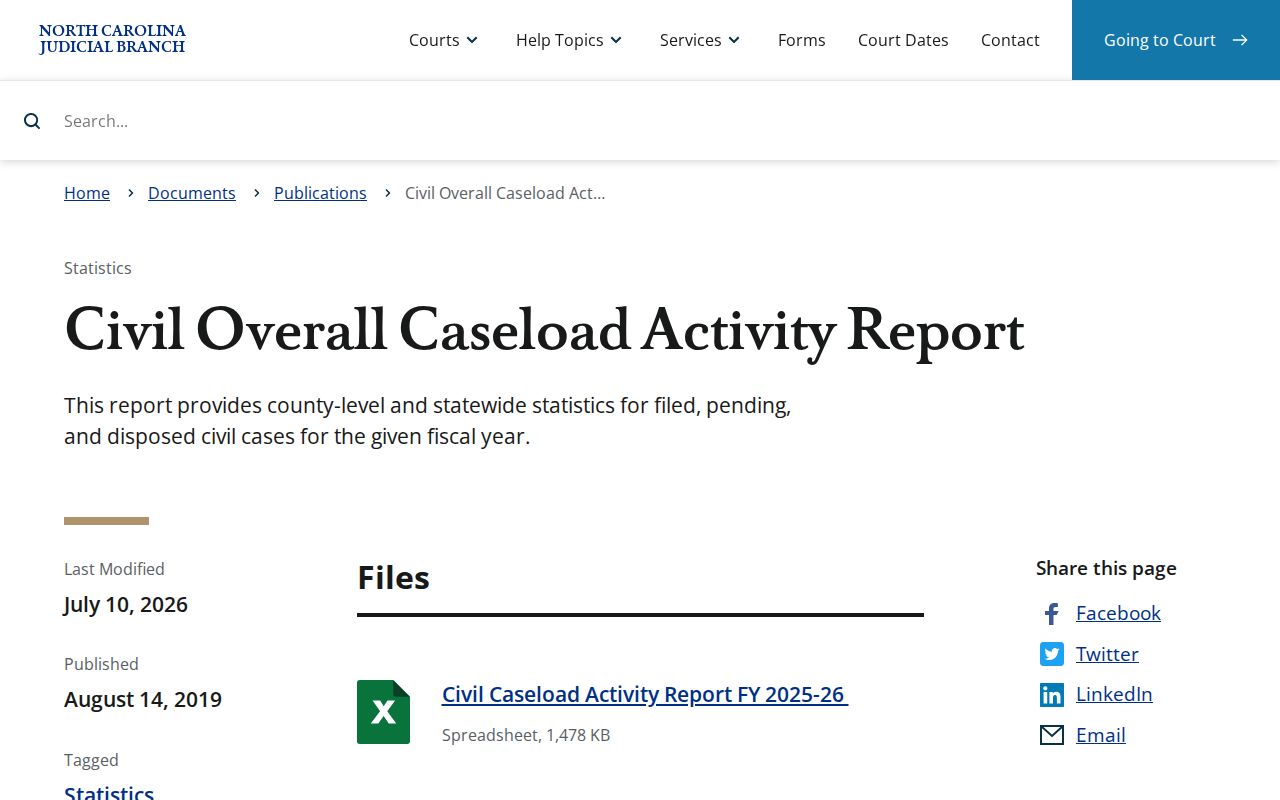
Those separate categories are a reminder to search by the right case type rather than a generic county-court label. A Washington County civil docket search goes smoother when the filter matches the claim.
Note: A saved Portal case is a convenience feature and does not give an account holder access to restricted Washington County records.
Inside a Washington County Civil Docket
Think of a Washington County civil Case Summary as a dated log. It logs public case activity. It can identify the case, the public parties and their roles, the assignment, and a public cause of action. Events, hearings, dispositions, and financial information may appear when applicable. Public documents are sometimes available. Confidential or sealed documents stay unavailable. The state’s Portal FAQ draws one line clearly. The online result is not the Clerk’s official court record.
| Case information | The Washington County civil case identity and public assignment information. |
|---|---|
| Party information | Public parties and roles as access rules allow. |
| Cause of action | The public civil-side claim category when Portal makes it available. |
| Case events | Dated filings, notices, or court actions in the Register of Actions. |
| Hearings and disposition | Public setting and outcome data; current setting searches belong in Search Hearings. |
Use the public timeline to identify the case and its recorded action. An event label alone proves little. A filed order, full judgment, or certified copy comes from the Washington County Clerk.
Washington County Civil Docket Dollar Lines
Washington County civil dockets divide along the trial court’s jurisdiction lines. District Court handles civil cases under $25,000. Magistrates decide small claims up to $10,000. Bigger civil matters belong to Superior Court. The Clerk also keeps estate and special-proceeding files, since the county runs one unified Clerk structure with no separate civil clerk.
| Washington County forum | Typical civil docket scope | Local record path |
|---|---|---|
| Magistrates | Small claims up to $10,000 | Unified Clerk and court record system |
| District Court | Civil cases below $25,000 | Portal Case Summary, hearings, calendar files, and Clerk file |
| Superior Court | Larger civil matters and District Court appeals | Portal Case Summary, calendar files, and Clerk file |
| Clerk / probate | Estates and special proceedings | Clerk custody and public Portal access when available |
The District Court jurisdiction summary lays out these state court roles. Washington County has a single courthouse and one local clerk office. That makes it simple to know where to ask. Choosing the right civil docket category still matters.
Note: A Washington County case can be public. Parts of the case file may still remain confidential, sealed, or unavailable for remote access.
Civil Case Types on the Docket
Not every Washington County civil docket entry grows out of a contract fight. Some do grow from a property dispute, but not all. Portal splits its public results into Civil Actions, Estates, and nonconfidential Special Proceedings. The Clerk's record duties reach probate matters as well. Some civil cases carry a family or mental-health label too. That label controls what the public can view in the court records. The category matters for a second reason. A plain party-name docket search can mix unlike court records into one result list. Small claims, District Court civil actions, and Superior Court civil actions sit in different Washington County court assignments. They also fall in different calendar groups. An appeal can shift the track again. The docket tells you where the case landed and what recorded step occurred. It is no substitute for legal advice on filing, responding, or appealing.
Washington County Civil Continuance Motions
A Washington County civil calendar entry never resets itself. District 2's published continuance rule sets the steps. A party must file a written motion and distribute it in advance to counsel, or to any unrepresented party. Before the session opens, the request goes to the Senior Resident Superior Court Judge or a designee. After that, the presiding judge decides. None of it shows in a bare calendar listing, which cannot tell you whether the requested change was granted. Objecting parties get three working days after distribution. Continuances are presumptively disfavored. A court may still grant one for compelling reasons or basic fairness. Portal's current Case Summary and Search Hearings come first. Check both. Confirm timing with the Clerk or court contact when the date matters. The Washington County local rules page lists the District 2 procedures in full. For a civil court date directly, pick Washington and Civil in the official calendar application. Calendar files round out the case and hearing results, though the latest court notice, order, or Clerk confirmation still controls.
Civil Docket Settings and Hearings
A setting is a scheduled event, not a result. Washington County civil docket settings appear as public case events whenever access rules permit. Search Hearings is the focused online route. It finds a date, time, and location by case number, party name, business name, attorney name, bar number, judicial officer, or courtroom. Case Summary supplies the surrounding story. Earlier events and public disposition details appear there. The calendar application sorts Washington County files into Civil District and Civil Superior sections. A conference differs from a motion hearing. A trial setting, continuance, or appeal-related entry can likewise require a different response. When an entry is unclear, or an online file is missing, the Washington County Clerk confirms it. The Clerk also checks the current court notice. A later order can change things, so a public hearing entry only records that the event was set.
Washington County Civil Case Events
A Case Event line is not the order. Washington County civil timelines record steps: a motion filed, an order entered, a hearing held, a disposition reached. The document itself may be public, restricted, too large for Portal, or held only by the Clerk. A public display carries no Clerk certification. Treat it as a lead, not the text of an order or judgment. When a public document is required, the Clerk's office holds the county's files. State court-record guidance points people to the Clerk in the county of filing. That office handles paper files and certified copies. Smart Search sometimes lacks the civil material. The first-floor Clerk counter works. So do the public self-service terminals, the telephone line, and mail. Each route reaches the same records.
Civil Docket Access Rules
Access starts with a simple rule: Clerks maintain the court records, files, dockets, and indexes. Public information stays open unless a law blocks it. Registering for Portal changes nothing there. Confidential, sealed, or restricted material stays hidden. A family-side file, a sealed portion, or other protected data does not become public just because a case number exists. And a missing online result may simply reflect an older file or a search mismatch.
Public-record limits:
G.S. 7A-109 provides for Clerk record keeping and public inspection except where law prohibits access.
Chapter 132 supplies North Carolina’s public-record copy baseline, while court-file practice remains subject to court-specific law.
G.S. 7B-3000 limits public inspection of juvenile records and sealed portions.
Locate the case before requesting records. A Washington County civil docket search does that quickly. When official documents matter, ask the Washington County Clerk rather than relying on a public Portal display.
Washington County Civil Clerk Copies
Certified copies come from the Washington County Clerk, not Portal. Fees follow a statutory schedule. That schedule sets $2.00 for the first page of any document. Each additional page, or fraction of one, costs $0.25. A certificate under seal adds $3.00. No stated turnaround time, payment method, or special copy-order form appears locally. So confirm the process with the Clerk before mailing anything. The Washington County courthouse listing names the building where the local court sits. The Clerk also wears a second hat as probate judge. In that role, the office keeps the county's estate and special-proceeding files alongside its civil docket.
The Clerk fee statute sets out these copy charges in full.
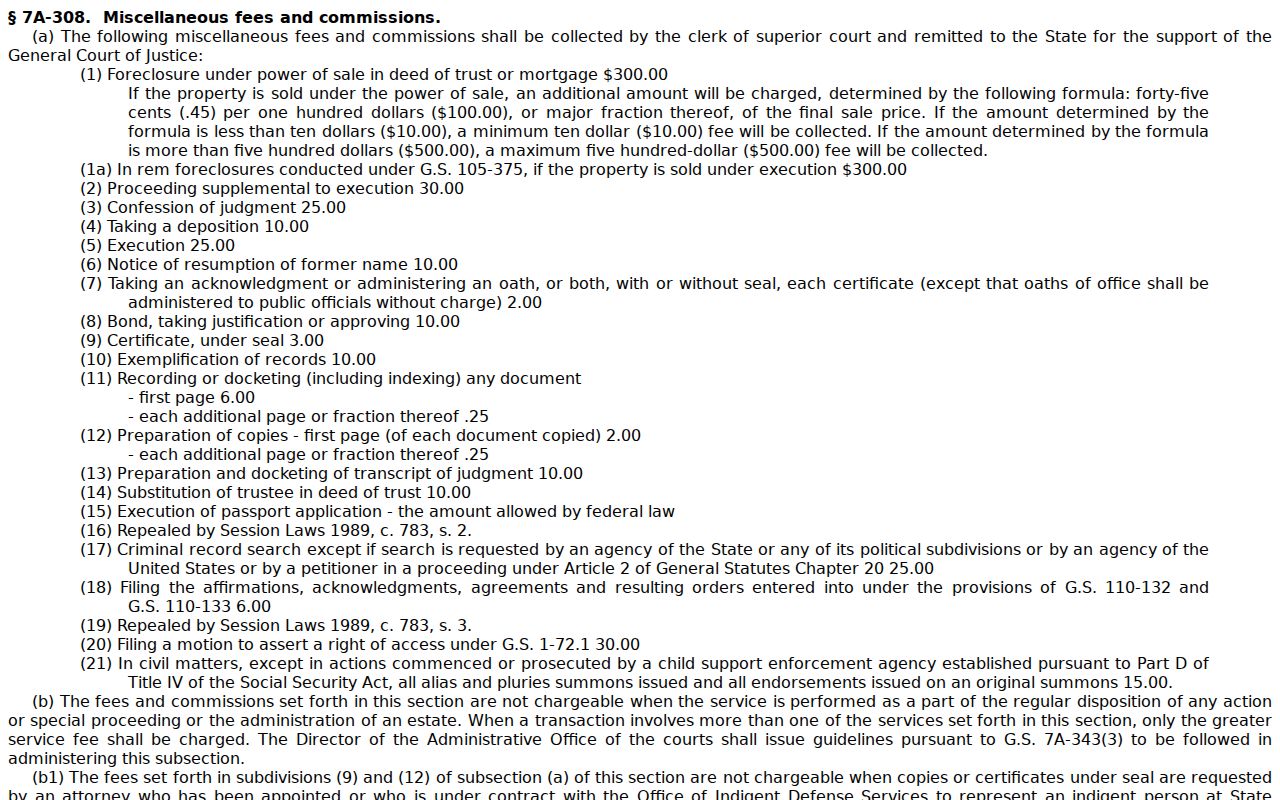
A public docket display and a certified copy are different things. The Clerk's seal makes the difference. The North Carolina public-records chapter sets the access rules.
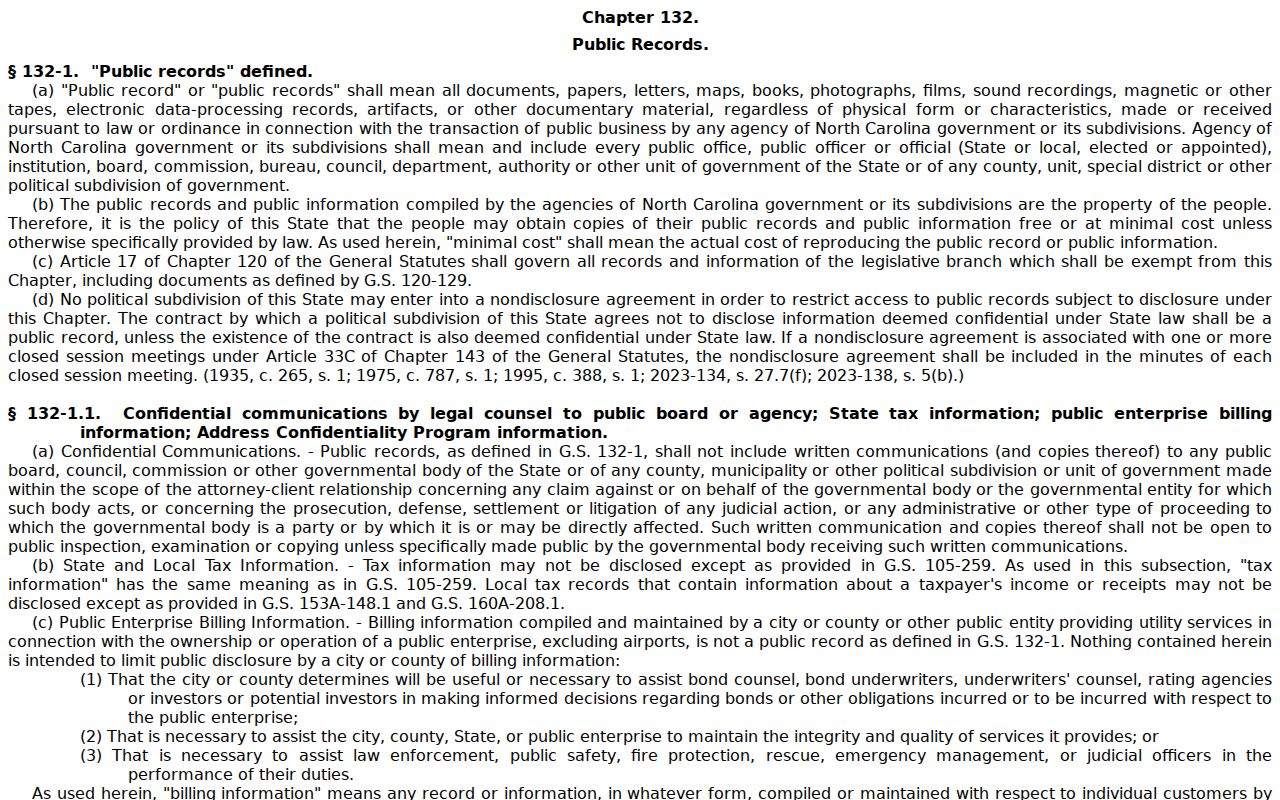
State law sets the baseline: court files are public. Certification of a Washington County court file still runs through the Clerk. Before you ask the Clerk for copies, get the case number or party name from the countywide Washington County case lookup.